



Team mediation is a facilitated conversation where an outside, neutral mediator helps a group talk through what has gone wrong and agree what happens next. It is not discipline, not an investigation and not a hunt for who is to blame. Expect private pre-meetings, agreed ground rules, a shared discussion and a short written outcome.
The question usually sounds like this: "My manager says our whole team is going to mediation. Is someone in trouble?" It is a fair worry. Most people have never been in a group mediation, and the word itself can sound like a warning.
This article walks through what happens in a group session, with a focus on the parts that are different from a two-person mediation: several voices, sub-groups and spokespeople. You will also see what you can do beforehand, what stays confidential, and when to ask your employer for outside help. If you are the owner or GM planning one, the same detail will help you set it up well.
Key Takeaways
- Team mediation looks forward. It asks what happens next, not who was right.
- Most of the work happens before the joint session, in private conversations with each person.
- Ground rules are agreed with the group, and they matter most when people have stopped talking directly.
- A spokesperson can speak for a sub-group's shared view. You can still add your own view or ask for a private session.
- Confirm confidentiality with the mediator at the start, including the safety exceptions.
- A good result is a short written agreement and a check-in date. Partial progress is real progress, and nothing is guaranteed.
Summary Table
| Stage | What happens | What you can do |
|---|---|---|
| Scoping | The business explains the situation to the mediator and agrees who should take part | Ask your employer why mediation has been chosen |
| Invitations | Everyone involved is told what the process is and is not | Ask questions before you say yes |
| Private preparation | The mediator meets each person separately | Be honest about your concerns and what you want to change |
| Joint session | A structured discussion with agreed ground rules | Speak to the future, use plain language, take breaks |
| Spokespeople | Sub-groups may put a shared view through one person | Brief your spokesperson, then add your own view if needed |
| Outcome note | A short written record of what the group agreed | Check that it is workable and you can live with it |
| Check-in | The group reviews how the agreement is going | Note what is working and what is not |
What team mediation is, and what it is not
Team mediation is a voluntary, confidential conversation, run by a neutral person, so a group can sort out how they will work together from here. It asks what happens next. It does not decide who was right, hand out consequences or produce findings. If someone has made a serious complaint, a different process may fit better.
Our view is that conflict is not a bad word. It is usually a sign that something important needs attention. Most workplace conflict starts small, with an issue everyone decides to manage around. By the time it surfaces, people are often reacting to the silence, the delay and the sense of unfairness as much as to the original problem. A team mediation is a calm, structured way to deal with all of that at once.
It helps to know the difference between mediation and an investigation. Mediation is voluntary, confidential and forward-looking, and the people involved own the outcome. An investigation establishes facts, makes findings and can lead to action. We put it simply: mediation asks what happens next; an investigation asks what happened. Our guide on mediation or investigation explains how to tell which one a situation needs.
Not every matter needs the same process. Some need a clear management decision, some need HR guidance, some need coaching, and some need an independent investigation. Many matters also involve three, four or a whole team, not just two people. If you have been told a team mediation is coming, it usually means the business has decided the issue is about how the group works together, not about one person's conduct.
What happens in a group session, in order
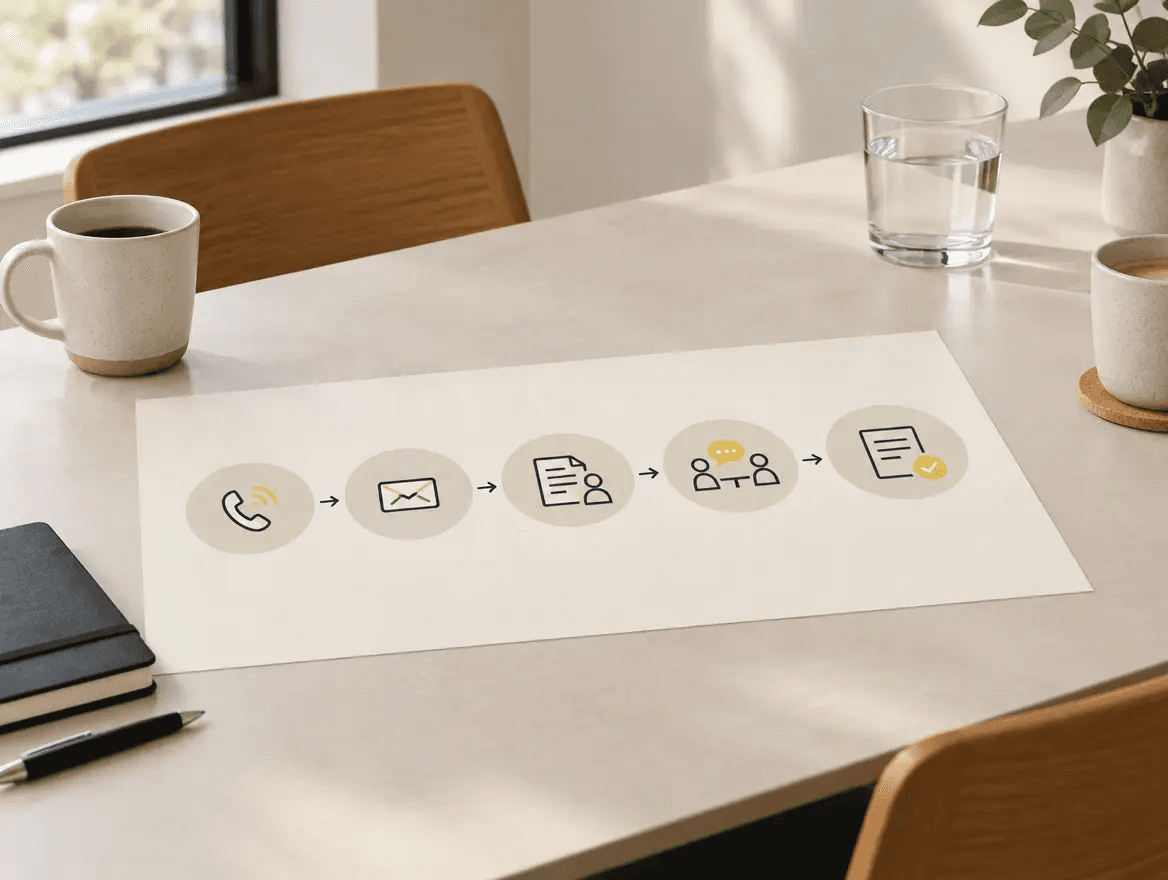
A group mediation usually runs in five steps: a triage call with the business, invitations, separate preparation with each person, the joint session and a short outcome note. Most of the work happens before the group meets. The session itself is structured so everyone is heard without it turning into a debate.
Here is that sequence, which we call what happens, in order:
- Triage call. The owner, GM or HR lead talks the matter through with a mediator. The aim is to confirm that mediation is the right process and who should be in the room.
- Invitations. Participants are told what the session is, that it is voluntary and confidential, and what it is not. This is the moment to ask questions.
- Separate preparation. The mediator speaks with each person privately before any joint session.
- The session. The group meets, usually by video with separate private rooms available. In person is available on request.
- Outcome note. A short written record captures what people agreed.
Group sessions behave differently from two-person ones. There are more voices, so airtime needs managing. People form sub-groups, often without meaning to, and alliances that have built up over months show up in the room. Quieter people may agree with whoever speaks first. A good mediator watches for all of this and shapes the session around it, for example by splitting into smaller conversations or by checking in with individuals privately.
The mediator is on nobody's side. They do not rule on who is right and they do not push towards a particular answer. Their job is to keep the conversation calm, clear and fair so the group can reach its own.
Before the room: private pre-meetings
Before any joint session, the mediator meets each person privately. They ask how you see the situation, what you would like to be different and what worries you about meeting as a group. You can safely raise your concerns, your goals and anything you need to feel comfortable in the room.
These preparation conversations are the most important part of the process. They let the mediator understand each perspective before the group gathers, and they let you say things you would not say in front of colleagues.
Expect questions like these:
- What is going on, from where you sit?
- How has it affected your work and the team?
- What would better look like in a few months?
- Is there anything you are worried might happen in the session?
- Is there anything you need so you can take part comfortably?
You can raise your own part in it, your frustrations, and practical needs such as being seated away from someone or wanting breaks. You can also tell the mediator if you would prefer a spokesperson or a private session during the day.
Two things to say out loud if they apply. First, if you believe something serious has happened, such as bullying, harassment or a safety concern, tell the mediator. That may point to a different process, such as an investigation, and the mediator can talk through the options. Second, if you have legal or entitlement questions, those are for a lawyer, not for the mediation.
Agreed ground rules: how the room will run
Ground rules are agreed at the start of the session, with the group's input, not handed down. Typical ones are one voice at a time, breaks when needed, phones away and respectful language. They give a mixed group a shared way of behaving, which matters most when people have stopped talking directly.
A few details are worth knowing:
- One voice at a time. The mediator manages the order. Interrupting is the most common way a group conversation breaks down, so this rule gets enforced gently and consistently.
- Breaks. Anyone can ask for one. On video, the mediator can move people into private rooms. A short pause often does more than another round of talking.
- Phones away. Messages and notifications split attention, and side messaging between colleagues during a session erodes trust fast. On video, this also means closing other tabs.
- Respectful language. The aim is to describe the impact of something, not to label a person. "When handovers are late I can't finish the job" works better than "you're lazy".
Ground rules are also a safety net. If someone breaks one, the mediator steps in, resets, and if needed takes people into separate rooms. Nobody gets told off. The point is to protect the conversation so it can keep going.
Who speaks: how a spokesperson works
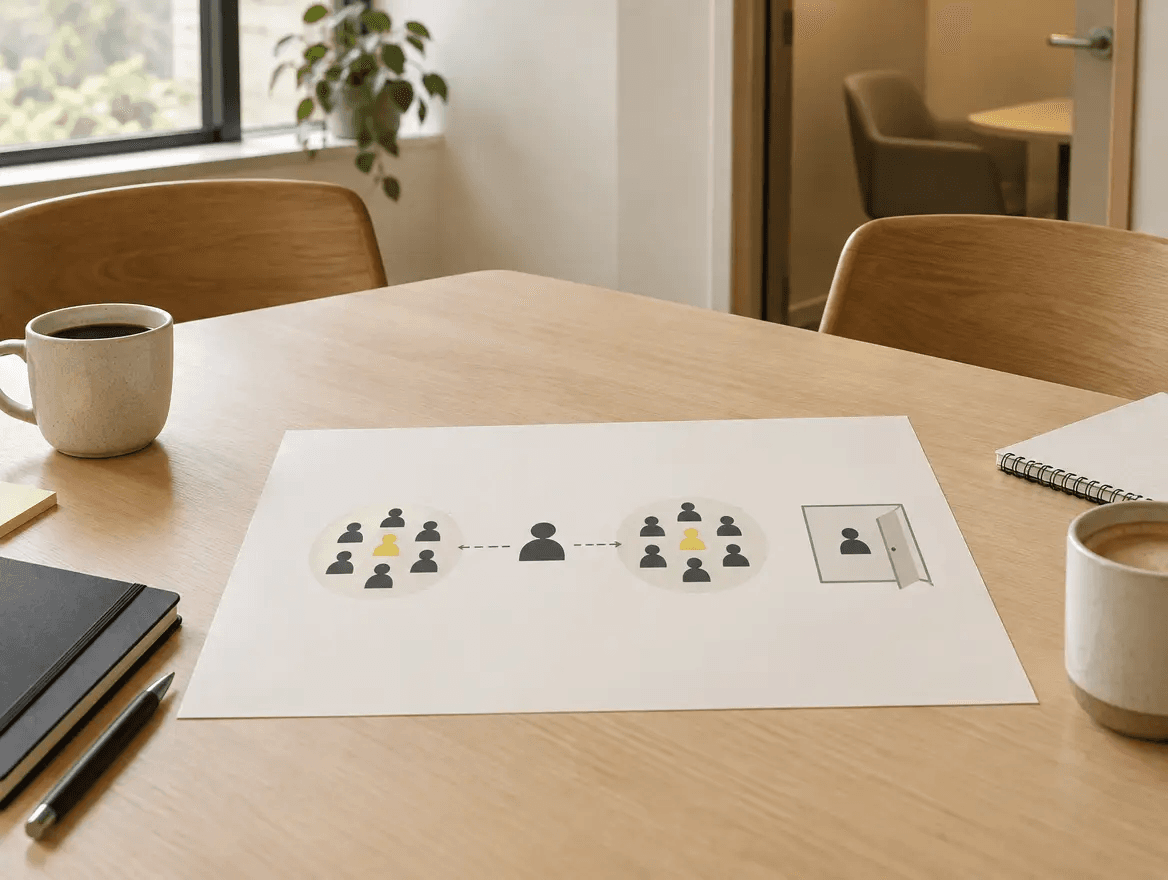
In larger groups, a sub-group may nominate a spokesperson to put its shared view, so the session does not become a dozen overlapping conversations. A spokesperson speaks for common ground, not for every individual. You can still add your own view, and you can ask the mediator for a private session.
Why use one at all? Because a session with eight or ten people can drift into repeated points and crossfire. A spokesperson helps the group be efficient and takes pressure off people who would rather not speak first. It is a tool, not a requirement. The mediator will usually discuss it in the preparation conversations.
Briefing your spokesperson
If a colleague speaks for your sub-group, give them a short, specific brief. Agree two or three points you all share, and what better looks like. Agree what is off limits and what they can concede without checking back. Keep it to the shared ground, because a spokesperson who tries to carry every individual grievance ends up carrying none of them well.
Adding your own view
A spokesperson does not silence you. If something important to you has not been said, tell the mediator in your private conversation or during the session. Most mediators build in time for individual input after the spokespeople have spoken. Keep it short and anchored in your own experience, not what you think others meant.
Asking for a private session
Sometimes a person has something they cannot say in front of the group, or they feel the discussion is moving too fast. Ask the mediator for a private session. On video this is simple, because separate private rooms are part of the format. Private sessions are a normal part of group mediation, not a sign that something is wrong.
What is confidential and what is not
Mediation is confidential. What is said in the room is not repeated outside it, and the mediator does not report to management on who said what. What is usually shared is the agreed outcome note. There are safety exceptions, so confirm the exact boundaries with the mediator at the start.
In practice, think of it in three parts:
- Stays in the room. The discussion itself, what individuals said in private preparation, and the mediator's impressions. Participants are normally asked to agree to keep the discussion confidential among themselves too.
- Is shared. The outcome note, which records what the group agreed. The business also knows who attended. You and the group can agree on what goes in the note and who receives it.
- Safety exceptions. If someone discloses a risk of serious harm to themselves or others, or a workplace safety matter that cannot be ignored, a mediator may not be able to keep it to themselves. A good mediator explains this before you say anything.
We are not a law firm and give no legal advice. Whether something said in mediation could be used in another process is a question for a lawyer. What we can say is this: ask the mediator in the first few minutes, in your own words, "What will be shared, with whom, and what are the exceptions?" A clear answer should come back straight away.
One more point. Confidentiality inside the room does not control what colleagues say in the kitchen afterwards. Agree as a group how you will talk about the day, even if it is only "we worked on it and we are giving it a go".
What outcomes look like
A good outcome is a short written agreement on how the group will behave and work, plus a date to check in. It might cover communication, handovers, meeting rhythms or who decides what. Partial progress counts. Mediation cannot promise that everyone leaves happy or that every issue is resolved.
Imagine a 40-person manufacturer where the production and dispatch teams keep blaming each other for late orders. A written outcome might say: production flags delays in a shared channel by a set time each day, dispatch confirms receipt, and both team leaders meet briefly each week. These are small, practical, behaviour-and-workflow commitments that people can actually keep.
Three things are worth knowing:
- The note is short. It records what people agreed to do, not who was wrong.
- There is a check-in date. Agreements drift unless someone looks at them again. The check-in lets the group adjust what is not working.
- Partial agreement is normal. The group may settle three issues and leave one open. That is still progress, and the open issue may need another process, such as HR guidance, coaching or a management decision.
No reputable mediator will promise a result. The people in the room own the outcome. The mediator's job is to give the conversation a fair chance.
What you can do yourself first
You can prepare in about half an hour. Write down two or three issues that matter most, describe what better would look like, and separate past grievances from future needs. This gives you something concrete to say and helps you stay calm when the discussion gets busy.
- Note two or three issues. Not ten. Pick the ones that most affect your work. If you list everything, the important points get lost.
- Describe what better looks like. Write it as something observable. "I get handover notes before I start my shift" is clear. "People respect me more" is hard to agree on.
- Separate past grievances from future needs. Past grievances explain how you got here. Future needs are what you are asking for. Mediation spends most of its time on the second.
Here is the difference in practice. A past grievance: "Priya ignores my emails." A future need: "I need a reply on urgent jobs within the same working day, or a quick call." The second can be turned into an agreement. The first usually starts an argument.
Start in the middle. You do not need to open with the biggest grievance or the worst event. Start with the issue you think the whole group can recognise, and build from there.
If your situation is more about a one-on-one conversation with your manager, our separate post on preparing for mediation with your manager covers that. You can also take the free two-minute Conflict Check to help work out what kind of process might fit.
When to point your employer to outside help
If you are an employee, it is reasonable to suggest outside help when the person running the process manages the people involved, has taken a side or will decide the outcome. If you are the owner or GM, a 45-minute triage call for $290 ex GST can confirm whether mediation is the right process.
For employees, a respectful way to raise it is to ask: "Who will run the session, and are they independent of the team?" If the answer is the manager, or someone who has already advised one side, say that you would feel more comfortable with an outside mediator. You can also share this article with your manager as a plain explanation of what group mediation involves.
For owners and GMs, the triage call is a 45-minute conversation with Shiv Martin, a nationally accredited mediator, followed by a short email of next-step recommendations. It carries no obligation. It works out whether you need mediation, HR guidance, coaching or an independent investigation, and who on the panel is the right fit. Group mediations are quoted after scoping, because our published mediation fees assume two participants and a team session depends on how many people are involved and how the matter is shaped.
We will not mediate a matter we have advised on. After an investigation, a different panel member mediates. That separation is deliberate. You can read more about how we run these on our workplace mediation page.
Why the boss can't run this one
We hold a view that not everyone agrees with: you can't be neutral about your own people, and they know it. A good manager can be fair, calm and well-meaning, and still not be the right person to run a conversation about their own team. They manage the people in the room. They have opinions, history and often a stake in the outcome. Even when they say nothing, the group reads it.
Owners without an HR team feel this most. They are close to the business and close to the people, and the instinct is to step in and sort it out. Often that is where the delay starts. Consider a 45-person trades and services business where two senior people have stopped talking directly. The owner hopes it will settle. Months pass. Other staff start to manage around it and some begin to think about leaving. By the time anyone says the word mediation, people are reacting to the silence and the wait as much as to the original issue.
An outside mediator changes the dynamic for a simple reason: they are someone on nobody's side. They will not decide who was right, they will not report on who said what, and they have no stake in who wins. That lets people say what they actually think, which is the only way a group agreement can hold.
The practical lesson is to act early. Calm, clear and early is usually better than perfect and too late. If you are an employee and you think your team is heading for this, say so while it is still small. If you are the person who has to decide, make that triage call before the silence sets.
Employees can take the two-minute Conflict Check or share this article with their manager. Managers can book the $290 ex GST triage call or enquire about workplace mediation.
References
Questions
Other questions people ask
- Is team mediation a disciplinary process?
- No. Mediation is not discipline and not an investigation. It does not decide who is right or hand out consequences. It helps a group agree how they will work together from here. If a serious complaint is involved, a different process, such as an independent investigation, may be more appropriate.
- Is workplace mediation confidential?
- Yes, mediation is confidential. The discussion stays in the room, and the usual output is a short outcome note that the group agrees. There are safety exceptions, for example if someone is at risk of serious harm. Ask the mediator at the start exactly what will be shared and with whom. Legal questions about confidentiality are for a lawyer.
- What is a mediation spokesperson?
- A spokesperson is someone a sub-group chooses to put its shared view in the session, so the discussion stays manageable. They speak for common ground, not every individual's detail. You can still add your own view or ask the mediator for a private session if something needs to be said separately.
- Do I have to take part in team mediation?
- Mediation is voluntary, and that is part of why it works. If you have concerns, raise them with the mediator or the person who invited you before the session. They should explain the process and answer your questions. If you are unsure about your obligations at work, that is a question for a lawyer or the Fair Work Ombudsman.
- Can I speak to the mediator privately during a group session?
- Yes. Private sessions are a normal part of group mediation. On video, the mediator can move you into a separate private room. You can also raise things in the private preparation conversation before the joint session, which is often the best time to do it.
Written by
Conflict Services
Mediators, an investigator, a leadership coach and HR and governance specialists, matched to the matter.


General information only, not legal advice. Conflict Services provides mediation, HR guidance and policy review.