





Fairness for a manager who is later cleared is built while the investigation is running, not after the outcome. It comes from neutral language, tight confidentiality, agreed update timing and a planned return to normal working relationships. The same standard applies to the person who complained, who is owed fairness whatever the finding.
A question that turns up in various forms on public workplace forums goes something like this, paraphrased and anonymised: a manager has been told a complaint was made about them, the matter is with an external investigator, and they have been asked to carry on as normal. They want to know whether, if they are cleared, things will ever go back to how they were.
It is a fair question, and it is also one for the business, not just the manager. If you are the HR or People leader, or the owner or GM with no HR team, you are probably already thinking about the day the outcome lands. This article sets out what to do now, while the investigation is live, so that an unsubstantiated outcome does not leave anyone worse off than the process itself did. Conflict is not a bad word. It is information, and it can be handled calmly.
Key Takeaways
- Fairness for a cleared manager is decided by how you behave during the investigation, not by the finding.
- Use neutral language in every email, note and briefing. Say "the matter", and say "allegations" only once they are formally framed.
- Decide who needs to know, write the list down, and give the wider team one short, neutral explanation.
- Agree an update rhythm with the investigator and tell both parties when to expect contact, even when there is no news.
- Unsubstantiated and partly substantiated findings lead to different next steps. Deliver them to each person separately and close the matter clearly.
- Plan the return: a facilitated conversation if both are willing, support for the manager's leadership, and scheduled check-ins at 30 and 90 days.
Summary Table
| Stage | What fair looks like | What commonly goes wrong |
|---|---|---|
| While the investigation is live | Neutral wording, factual notes, no signals about the likely result | Reassuring one party in writing or describing the complaint as baseless or serious |
| Confidentiality | A written need-to-know list and a short neutral team message | Informal explanations that invite speculation |
| Updates | An agreed rhythm, the same message to both parties | Silence until there is news |
| Outcome delivered | Separate conversations, same format, written summary | One party hears via the grapevine |
| After findings | A clear close, a named owner for any follow-up | "Cleared but watched" limbo |
| Rebuilding | Offered facilitated conversation, coaching, scheduled check-ins | Assuming everyone will simply move on |
| Neutrality | An outside investigator or mediator on nobody's side | The owner trying to run every step personally |
Why does language matter while an investigation is live?
Use "concerns" or "complaint" in the early stages, "allegations" once they are formally framed, and "the matter" throughout. Keep notes and emails factual, describing what was said or done rather than what it means. Never signal an expected result. Both parties, and possibly others, may read every word later.
The habit to build is describing, not characterising. "A complaint was made on a certain date about conduct in team meetings" is neutral. "We have a bullying issue" or "this is a misunderstanding" both pre-judge the outcome, in opposite directions.
Three practical rules help.
Keep the same words for both people. If you tell the complainant that you take the matter seriously, tell the manager the same thing. Avoid "we believe you" to one party and "don't worry, this will blow over" to the other. Each sentence feels kind in the moment and reads as bias later.
Keep file notes factual and dated. Record who said what, when, and what you agreed to do next. Leave out opinions about character, such as "she is a great manager" or "he has always been difficult". The investigator establishes what happened. Your notes should not compete with that.
Check every team message before sending. A one-line note saying a manager is "dealing with a complaint" already pre-judges. Say less, and say it neutrally.
This follows a simple distinction we use often: mediation asks what happens next, while an investigation asks what happened. While the investigation is live, everyone in the business should stay on the second question and leave the first until findings are in.
How do you keep confidentiality tight during a workplace investigation?
Decide who genuinely needs to know, write that list down, and share only what each person needs to do their job. Give the wider team one short, neutral explanation for any absence or change in reporting line. Deal with gossip by redirecting it calmly, not by punishing curiosity.
For most businesses of 20 to 199 staff, the need-to-know list is short: the owner or GM, whoever is running the process internally, the investigator, and the person covering any interim reporting line. Add IT or payroll only for the specific task they need to do.
Absences and changed reporting lines. If the manager steps back from supervising certain people, or takes leave, the team will notice within a day. A short message works well: "For the next few weeks, your team will report to Sam while we sort out some arrangements. Nothing further to share, and please direct work questions to Sam." The wording matters. Interim arrangements are practical steps, not findings, and the message should not hint otherwise. The business makes those decisions, so make them carefully and keep them as light as the situation allows.
Gossip. People fill silence with stories. Telling staff not to talk rarely works on its own. Give them something to do instead: "A matter is being handled through a proper process. We can't discuss details. If you have relevant information, you can raise it with the investigator, and please don't speculate with colleagues." Repeat it, calmly, if needed.
Explaining limits honestly. Tell each party what confidentiality means in practice: who will know, why, and where it has limits. Do not promise absolute secrecy to either person. Promising more than you can deliver is its own kind of unfairness.
If you want a second pair of eyes on the wording, hourly HR guidance is a lighter option than a retainer. It suits drafting the team message and the need-to-know list.
How often should you update both parties during an investigation?
Agree a rhythm with the investigator at the start, then tell both parties when to expect the next update, even if the update is that there is no news. Predictable contact matters more than speed. People read silence as a sign the process is stacked against them.
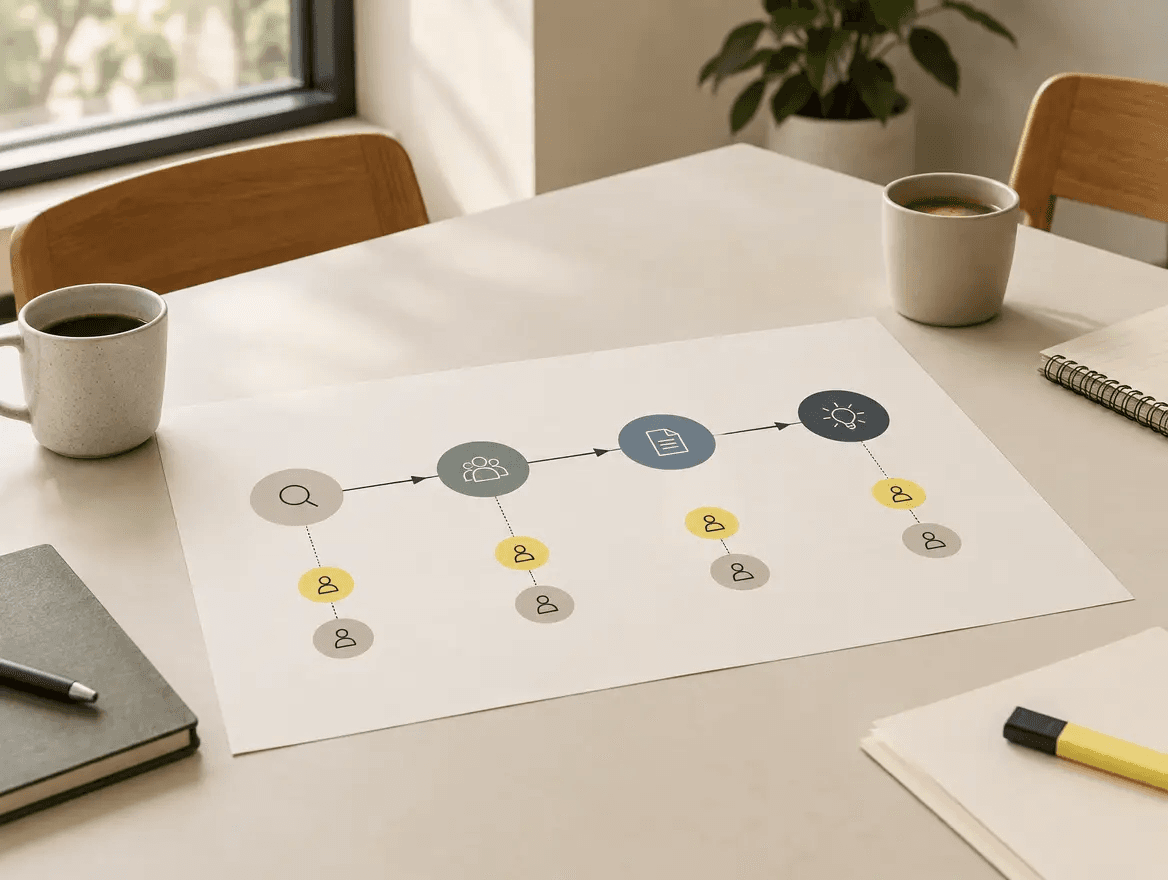
This is the most overlooked part of a fair process. Most people can wait for an answer. What they struggle with is not knowing whether anyone is still working on it. Waiting without information feels unfair, whichever side you are on.
Here is how to set it up.
- Ask the investigator what can be shared and when. An independent investigator will usually be clear about stages: scoping, interviews, evidence review, drafting. If you are still choosing one, an independent investigator can set the scope and cadence before anyone is interviewed.
- Pick a rhythm and write it down. It might be a set day each fortnight, or a note at the end of each stage. What suits the matter is for you and the investigator to decide. The point is that it is predictable.
- Send the same message to both parties. Same wording, same day, same format. Neither should find out something later than the other.
- Keep updates about process, not content. State the stage, what happens next, whether the expected timing has moved and why in general terms, and what support is available. Never share evidence or what other people have said.
- If the timing slips, say so. "The investigator needs more time to complete interviews. We will update you again on Thursday" is far better than silence.
Imagine a 90-person business where a GM receives a complaint about a team leader. The first fair step is to acknowledge the complaint in writing within days, not weeks. Two days of quiet from the business, in that situation, is long enough for the complainant to wonder if anyone has noticed. Calm, clear and early is usually better than perfect and too late.
What changes when the outcome is unsubstantiated or partly substantiated?
Unsubstantiated means the investigator could not establish, on the evidence, that the conduct complained of occurred as described. Partly substantiated means some parts were established and others were not. Deliver findings to each person separately, in the same format, and give both a clear next step so nobody is left in limbo.

These two outcomes feel similar from a distance and need quite different handling.
Unsubstantiated. The finding is about the specific conduct complained of. It does not mean the complainant lied, and it does not mean the working relationship is fine. A person can raise a concern honestly and still have it not established on the evidence. Say that plainly to both people. The manager needs to hear that the matter is closed. The complainant needs to hear that raising it was a legitimate thing to do, and what support remains.
Partly substantiated. Here each element needs its own next step. Some parts may call for a management decision, others for coaching, others for a conversation between the people involved. Be specific. "Some matters were established" without a path forward leaves the manager anxious and the complainant unsure whether anything will change. Any employment action or entitlement question that follows is for a lawyer, not for us. Conflict Services is not a law firm and gives no legal advice.
Delivery. Tell each person separately, close together in time, and ideally on the same day so that neither hears from the grapevine. Offer a support person. Give the same written summary format to both. Keep the sessions about the findings and what happens next, not a rerun of the evidence.
Close the matter. Avoid the limbo where the manager is formally cleared but quietly watched. If any performance or conduct topics are separate from the investigation, say so explicitly, name them, and keep them separate. If they are not, say the matter is closed. For choosing the next step once findings are in, see mediation or investigation.
Tell the team only that the matter has concluded and that reporting lines are returning to normal, if they are. No detail, no victory lap, and no hint of who was right.
How do you rebuild working relationships after an investigation?
Offer a facilitated conversation or mediation once findings are in, support the manager's return to leadership, and check in at 30 and 90 days. Mediation is forward-looking, so it suits repair after the facts are settled. Participation is voluntary, and neither person should be pushed into it.
A finding closes the question of what happened. It does not repair the relationship, and both people still need to work in the same business.
A facilitated conversation or mediation. Mediation is voluntary and confidential. The mediator does not decide who is right. The people agree what happens next, and a short outcome note records it. Preparation happens separately with each person first. Our half-day mediation is $2,900 ex GST for a 3.5-hour session with two participants, by video anywhere in Australia or in person on request. Extra participants are about $700 each as a guide. After an investigation, a different panel member mediates, so the person who investigated is never the mediator.
The usual sequence is what we call "What happens, in order": a triage call, invitations, separate preparation, the session, then an outcome note. Start in the middle. You do not have to resolve the whole history, only agree how the two people will work together from here.
Support for the manager. A cleared manager often returns carrying more than they say: uncertainty about how the team sees them, hesitation about giving feedback, a loss of confidence. Conflict coaching for leaders is $1,290 ex GST for four one-hour sessions and a plan. It gives the returning manager a private space to work through practical questions such as how to hold a first team meeting and how to approach the person who complained.
Support for the person who complained. They are owed the same care. Make sure there is no cold shoulder, no loss of opportunities and no quiet commentary from colleagues. Their working life continues too.
Check in at 30 and 90 days. Put both dates in the diary when findings are delivered. Ask each person separately three simple questions: How is working together going? Is anything from the process still unresolved? What would make the next month easier? If a whole team was affected, include a short team check-in. Many matters involve three, four or a whole team, not just two people.
When should you bring in outside help?
Bring in outside help when you manage either person, have advised one side or will decide the outcome. You can't be neutral about your own people, and they know it. An external investigator, mediator or HR adviser is someone on nobody's side, which is exactly what both parties need.
Owners and GMs often feel they should handle everything personally, and that doing otherwise signals weakness. In our view the opposite is true. A person who will decide the outcome, or who has a working relationship with one side, cannot be the neutral in the process. Even if you are scrupulously fair, the people involved will wonder.
Not every matter needs the same process. We use a simple frame called "Choose the right process": a management decision, HR guidance, conflict coaching, mediation, or an independent investigation. Many concerns that arrive as a "complaint" are really about working relationships and need no investigation at all. Some clearly do. A short triage call helps sort which is which. It is $290 ex GST for 45 minutes with Shiv Martin, a nationally accredited mediator, followed by a short email of next-step recommendations, with no obligation.
Workplace investigations are quoted after scoping. The matter is scoped first, then you get an estimate, which is revisited with you if the matter changes. For general information on workplace complaints and psychosocial hazards, the Fair Work Ombudsman and Safe Work Australia both publish guidance (see References).
Why "cleared but watched" is the unfairness nobody plans for
Most organisations plan for the investigation and the outcome. Few plan for the weeks after an unsubstantiated finding, and that is where a cleared manager is most likely to be treated unfairly, usually without anyone intending it.
Imagine a 45-person trades and services business. An operations manager is cleared after a complaint from a senior team member. The owner says "no further action" and means it. But over the next month the owner stops copying the manager into some decisions, a few staff go quiet when the manager walks in, and a performance conversation that was due months ago is suddenly raised in a way that feels connected. Nobody has said the manager is under suspicion. Everybody can feel it.
This is unfair to the manager, and it is unfair to the person who complained, who now works alongside a manager who is quietly resentful and a business that has not said what the finding means. That is why our view is that fairness is owed to both people, and why the finding is not the end of the work.
Here is our contrarian point. An unsubstantiated finding is not a sign that nothing was wrong. The conduct complained of may not have been established, while real friction around workload, communication or role clarity still exists. Treat the complaint as information. Conflict is not a bad word, and a business that treats it as shameful pushes it underground, where it grows.
The fix is a deliberate close:
- Say what is closed. Tell the manager, in writing, that the matter has concluded and what that means.
- Separate anything else. If a performance or workload topic is still open, name it, own it and keep it apart from the investigation.
- Name one owner for follow-up. One person is responsible for the 30 and 90 day check-ins.
- Offer repair, don't impose it. A facilitated conversation, coaching or both, for anyone who wants it.
If you are mid-investigation and want to map the communication and post-outcome plan, book the $290 triage call with Shiv Martin, or enquire about an independent workplace investigation. If you are not sure what kind of problem you have yet, the free two-minute Conflict Check is a good place to start.
References
Questions
Other questions people ask
- What does unsubstantiated mean in a workplace investigation?
- Unsubstantiated means the investigator could not establish, on the evidence, that the conduct complained of occurred as described. It is a finding about specific conduct. It does not say the complainant was dishonest, and it does not mean the working relationship needs no attention.
- What should we tell the team when a manager is cleared?
- Keep it short and neutral: the matter has concluded, reporting arrangements are returning to normal, and no further detail will be shared. Avoid language that celebrates one person or implies the other was wrong. Then ask people to focus on work and direct questions to a named person.
- What happens next if a complaint is partly substantiated?
- Each element needs its own next step. Some parts may call for a management decision, others for coaching or a facilitated conversation. Deliver the findings separately to each person and be specific about what happens next. Questions about employment action or entitlements are for a lawyer.
- Should the person who complained also get support after an unsubstantiated outcome?
- Yes. Raising a concern is a legitimate thing to do, and they still have to keep working. Offer a support person when you deliver the finding, watch for colleagues treating them coolly, and include them in the 30 and 90 day check-ins.
- Is mediation appropriate after an investigation?
- Often, yes, if both people are willing. Mediation is voluntary, confidential and forward-looking, so it suits repairing how people work together once the facts are settled. After an investigation, a different panel member mediates, so the mediator is never the person who investigated.
Written by
Conflict Services
Mediators, an investigator, a leadership coach and HR and governance specialists, matched to the matter.


General information only, not legal advice. Conflict Services provides mediation, HR guidance and policy review.