





Workplace mediation with Conflict Services starts free: triage with our AI Concierge takes about ten minutes. A 45-minute call with an accredited mediator is $290. A half-day mediation for two people is $2,900 and a full day is $4,900. Each extra participant is about $700 as a guide. All prices are ex GST.
Most people searching for a price are close to a decision. Something has been simmering, you know it is not fixing itself, and you want to know what neutral help costs before you pick up the phone. That is a fair question, and it deserves a straight answer rather than a "contact us for a quote" page.
This guide sets out our published prices, explains what each one includes, and helps you choose between a half day and a full day. It also covers who pays if you have been invited to mediation, what mediation is not, and the cost most price lists leave out: the cost of waiting.
Key Takeaways
- Every matter starts with triage. It is free with the AI Concierge (about ten minutes, by voice or online chat), or $290 for a 45-minute call with an accredited mediator.
- A half day ($2,900) suits two people with a defined issue, caught early. A full day ($4,900) suits more participants, a longer history, several issues or a team setting.
- Extra participants are about $700 each as a guide. The exact fee is confirmed in our reply after triage, and nothing is booked or paid until you agree it.
- The business usually books and pays. If you have been invited to mediation, you are being asked to take part, not to fund it.
- Sessions run by video anywhere in Australia, so there are no travel costs. In-person sessions are available on request.
- Waiting is the expensive option. Calm, clear and early is usually better than perfect and too late.
Workplace mediation prices at a glance
Source: Conflict Services published prices, all ex GST, as listed on the pricing page.
| Option | What it includes | Price (ex GST) | Suits |
|---|---|---|---|
| Triage with the AI Concierge | About 10 minutes by voice or chat. Facts gathered for our team, which replies within two business days | Free | Any matter, as a first step |
| Triage call with a mediator | 45-minute call with an accredited mediator from our panel, plus a short email of next-step recommendations | $290 | People who would rather speak with a person first |
| Half-day mediation | 3.5-hour session for two participants, with separate preparation beforehand and a short outcome note | $2,900 | A defined issue between two people, caught early |
| Full-day mediation | 7-hour session, with separate preparation and an outcome note | $4,900 | Business partner disputes and complex matters |
| Extra participant | Added to a session, as a guide only | About $700 each | Matters involving three, four or a whole team |
Nothing is booked or paid until we have matched you with a practitioner and they have agreed the fee. There are no retainers and no lock-in contracts.
Why does triage come first, and can it cost nothing?
Yes, triage can cost nothing. The Conflict Services AI Concierge takes about ten minutes by voice or online chat on our booking page. It gathers the facts, and our team replies within two business days with who we would match, how it would run and the fee.
The Concierge is an AI assistant, and it is deliberately limited. It asks what is happening, who is involved and what you want from the process, then takes notes for our team. It never gives advice, never decides anything and never comments on anyone's conduct. You can ask for a human at any time.
You do not need to have the problem neatly defined. Start in the middle. Tell it what you know, including the parts that feel messy, and the team works out the rest.
Triage matters because not every matter needs the same process. Some need a clear management decision, some need HR guidance, some coaching, some mediation and some an independent investigation. Choosing the right process is often the hardest part, and an owner can't be neutral about their own staff. So we match each matter to the right person on the panel, not to whoever is free, and we check for conflicts of interest before we reply.
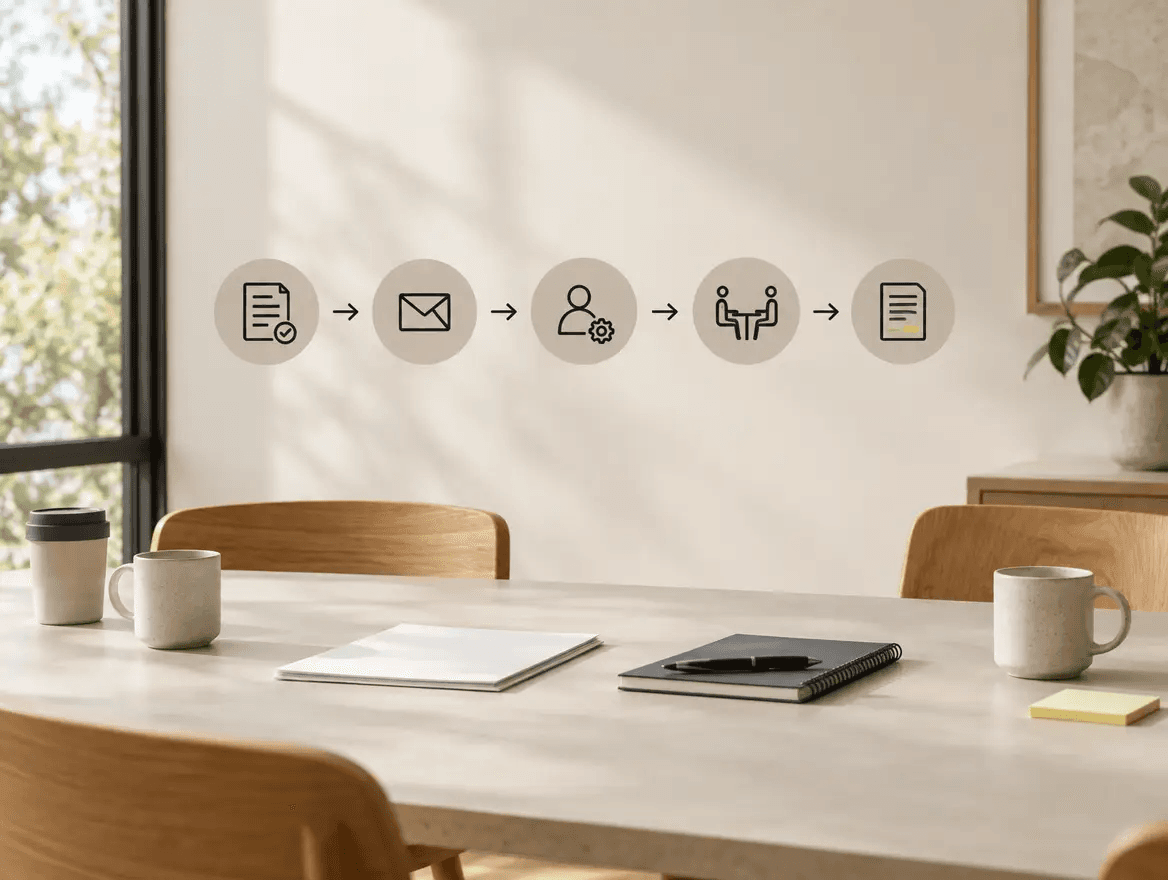
Here is what happens, in order, when mediation is the right fit:
- Free triage. The Concierge gathers the facts, or you speak with a mediator by phone.
- Invitations. Each person is invited to take part. Mediation is voluntary.
- Separate preparation. The mediator speaks with each person privately before any joint session.
- The session. A facilitated conversation by video, with separate private rooms available.
- Outcome note. A short note records what the people agreed happens next.
Only steps four and five carry the mediation fee. Triage and preparation are part of the process, not extras tacked on later.
When does the $290 call with a mediator suit better?
The $290 call suits people who would rather talk to a person than a chat window. It is 45 minutes with an accredited mediator from our panel, followed by a short email of written next-step recommendations. It is a paid, no-obligation conversation, not a deposit.
In our experience, three situations point towards the call. The first is when the matter is sensitive and you want to say it out loud to someone who can respond. The second is when you genuinely cannot tell what kind of problem you have. The third is when you need written recommendations to take to a co-owner, a board or a senior colleague.
Be clear-eyed about the trade-off. The $290 gives you no discount off a later mediation, so pay for it because you value the conversation, not because you expect it to offset the larger fee. If you simply want the facts logged and a recommendation back, the free Concierge does that job.
What does a half-day mediation cover, and when does it fit?
A half day is $2,900 ex GST for a 3.5-hour session with two participants. It fits a defined issue between two people, caught early, where both are still willing to talk and nobody is alleging misconduct. Separate preparation with each person comes first.
The session itself is run by an accredited mediator from our panel, by video, with separate private rooms so people can step out and think. The mediator does not decide who is right. The two people agree what happens next, and a short outcome note records it.
The half day works because the issue is narrow. Two people, one working relationship, one or two things that need to change. That is a lot of ground to cover in 3.5 hours, but not too much.
An illustrative example
This is a hypothetical example, not a real client. Imagine a 45-person trades and services business with no HR team. An operations manager and a senior team member have had a low-level tension for months. Nobody has done anything dramatic. The owner keeps hoping it will settle. Meanwhile, both people still do their jobs but have stopped speaking directly, and the owner spends part of every week carrying messages between them.
That is a typical half-day matter. There is no allegation, no formal complaint and a clear working question: how will these two people communicate and divide decision-making? Once both are in the room, with someone on nobody's side running the conversation, the issue often turns out to be smaller than the silence around it. What each person needed was to be heard and to agree a practical way forward.
The key words are "caught early". The same matter, left another year, may involve other staff, several incidents and positions that have hardened. That is when a half day starts to feel too short.
When does a full day fit, and what do extra participants add?
A full day is $4,900 ex GST for 7 hours. It suits business partner disputes and complex matters: more participants, a longer history, several issues or a team setting. As a guide, each extra participant adds about $700, confirmed in our reply after triage.
Conflict is not always two people. Many matters involve three, four or a whole team, and each additional voice needs time to be heard. A full day gives the mediator room to work through issues in sequence rather than rushing the hardest one at the end.
The $700 figure is a guide, not a fixed rate. The right number depends on who needs to be in the room and how the session would run, which is why we confirm the fee in writing after triage and before anything is booked.
Again, a hypothetical. Imagine a family-run business with about 30 staff and two co-owners. They disagree about reinvesting profits versus drawing them out. Over a year the disagreement has turned into avoided meetings, decisions made by email and staff being asked to pick sides. Neither owner wants a legal process yet.
That is a full-day matter. Each owner has priorities and non-negotiables that need to be set out in separate preparation first. The day itself then has room for the reinvestment question, the drawings question, and how decisions get made while they work through both. A written outcome might cover a framework, a regular partner meeting and a trigger for bringing in an outside adviser. Any legal or financial questions are for the owners' own advisers.
Half day or full day: how do you choose?
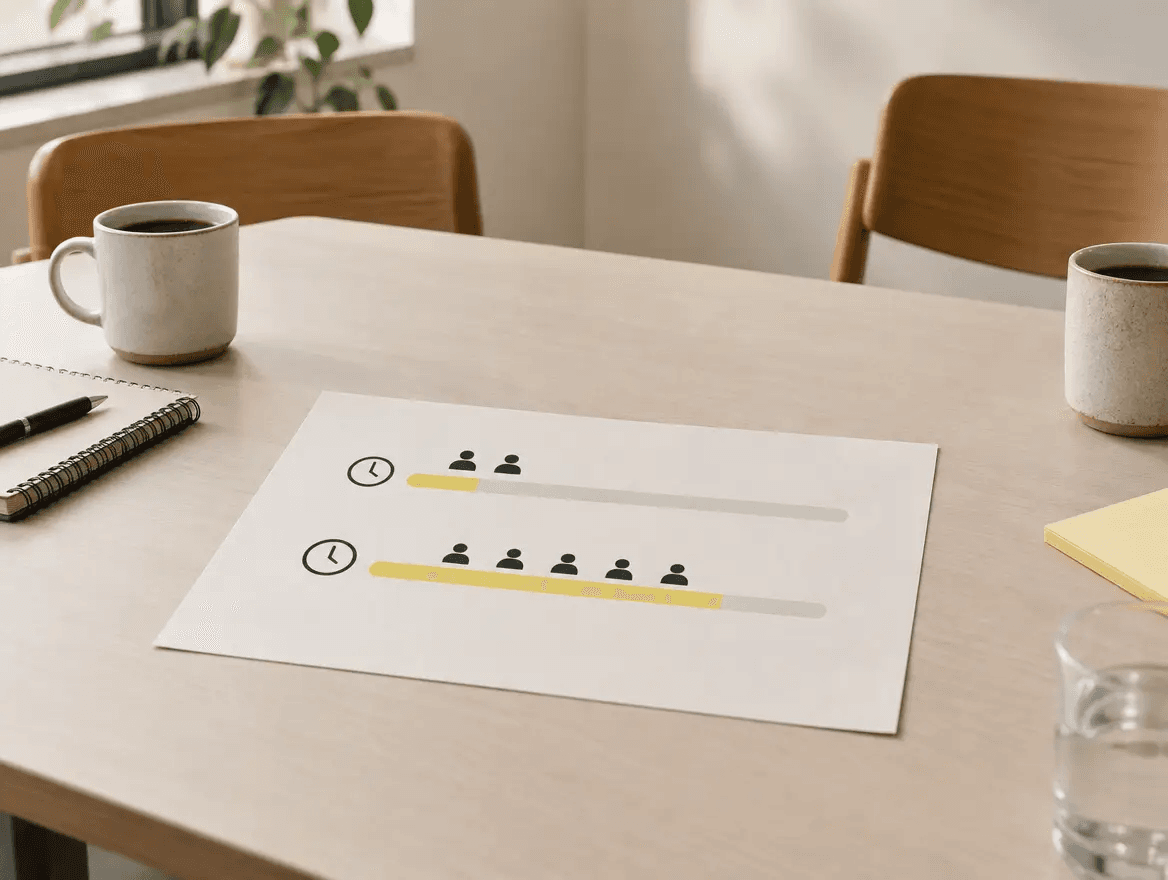
Choose a half day when two people have one defined issue and it is recent. Choose a full day when there are more people, a longer history, several issues or a team setting. If you cannot tell, triage will recommend a size before you pay anything.
Use these five questions as a quick check:
- How many people need to be in the room? Two points to a half day. Three or more points to a full day, plus an extra-participant fee.
- How long has it been running? A few weeks or months suits a half day. A year or more, with a pattern of avoided meetings, suggests a full day.
- How many issues are tangled together? One or two can fit in 3.5 hours. Several rarely do.
- Is it a team setting? Team dynamics usually need more time than a pair.
- Is it a business partner matter? Money, direction and ownership are rarely resolved quickly, so these usually run as full days.
There is a real cost to guessing wrong in either direction. A half day for a matter that needs a full day risks leaving things unfinished. A full day for a simple two-person issue spends money you did not need to spend. This is one reason triage is free: matching the size of the process to the size of the problem is the most useful thing we can do before you commit.
Why pay an outsider when you could handle it yourself?
You can't be neutral about your own people, and they know it. An owner or manager who supervises, has advised one side or will decide the outcome carries that history into the room. An outside mediator is someone on nobody's side, and video means no travel costs anywhere in Australia.
A good manager can and should have early, honest conversations with their staff. But once a dispute needs one side to feel heard by the other, the person who writes their performance review is the wrong person to run it. Both people read the room for signs of who the boss favours, even when the boss is trying hard to be fair.
This is not a criticism of managers or owners. It is a feature of the role. For the same reason, we will not mediate a matter we have advised on, and after an investigation a different panel member runs the mediation.
On the practical side, online workplace mediation in Australia removes the usual add-ons. Sessions run by video wherever people are, with separate private rooms, so there is no venue hire, no flights and no days lost travelling between sites. That suits businesses with regional staff, multiple locations or people on the road. In-person sessions are available on request.
There is also a broader reason to deal with conflict properly. Safe Work Australia's model code of practice on managing psychosocial hazards treats poor workplace relationships as a hazard to be managed, and how your state or territory applies the code is worth checking. Conflict is not a bad word, but leaving it unaddressed is a choice with consequences.
Who pays for workplace mediation if you have been invited?
The business usually books and pays. If you have been invited to mediation, you are being asked to take part, not to fund it. Mediation is voluntary and confidential, and the mediator does not decide who is right. If you are unsure, ask whoever invited you to confirm in writing.
Here is what to expect if the invitation lands in your inbox:
- Before the session. You speak with the mediator privately, separately from the other person. This is where you set out what matters to you and what you want from the day. Nothing is decided in these conversations.
- During the session. It runs by video, with separate private rooms if you need a break to think. You speak for yourself. The mediator keeps the conversation fair and moving.
- After the session. A short outcome note records what the people agreed happens next.
You are not on trial. Mediation asks what happens next, not what happened. Nobody is found at fault and nobody is told what to do. Whatever is agreed, the people in the room agree it.
In business partner and family business matters, the picture is slightly different. The partners usually settle between themselves how the fee is shared, and it helps to say so during triage. We confirm the fee and who it is addressed to before booking.
What is workplace mediation not, and what else might you need?
Mediation is not legal advice, a finding of fault or an investigation. We are not a law firm and give no legal advice. Mediation asks what happens next; an investigation asks what happened. If facts are disputed, an independent investigation may fit better.
That distinction matters for cost as well as for fairness. Mediation is voluntary, confidential and forward-looking, and people own the outcome. An investigation establishes facts, makes findings and can lead to action. They answer different questions, and using the wrong one wastes money and goodwill.
Here is how we think about choosing the right process:
- A management decision. Sometimes the issue is clear and the owner or manager simply needs to decide and communicate. No outside process is needed.
- HR guidance. When you need to think through next steps, our HR guidance is $290 an hour with no retainer.
- Conflict coaching. For a leader who wants to handle a pattern better, coaching is $1,290 for four one-hour sessions and a plan. It can follow mediation.
- Mediation. When people need to talk to each other and agree what happens next, with no one deciding for them.
- Independent investigation. When concerns or complaints need facts established. Our workplace investigator quotes after scoping: we scope the matter first, then give an estimate, and revisit it with you if the matter changes. It is not priced in advance.
Not every matter needs the same process, and some need more than one in sequence. If you are unsure whether you have a conflict, a performance issue or a formal conduct matter, say so in triage. Sorting that out is part of the job.
The cost most price lists leave out: what waiting costs
The biggest cost in a workplace conflict is rarely the mediator's fee. It is the months spent managing around the problem. Silence and delay make conflict harder and more expensive to fix, because people end up reacting to the unfairness as much as to the original issue.
Most workplace conflict starts small, with an issue everyone decides to manage around. Nobody wants to make it a big deal, so nobody raises it. By the time it surfaces, the original disagreement is buried under the delay, the workarounds and the sense that nobody did anything. That is why we say calm, clear and early is usually better than perfect and too late.
We will not put a dollar figure on waiting, because the honest answer depends on your business. But you can work it out yourself in five minutes. Look for these costs:
- Hours a manager or owner spends each week smoothing things over or carrying messages.
- Decisions that stall because two people will not meet.
- Requests for transfers, or people quietly looking elsewhere.
- Colleagues being asked to pick sides.
Then put a rough hours-per-week figure against the number of weeks it has been running, and compare it with the price of a half day. For many owners, the fee turns out to be the smaller number. The comparison is yours to make, using your own numbers, and we are not suggesting every matter works out that way.
There is a second point here, and it is a view we hold. The cheapest option is not the lowest-priced option. It is the right-sized process, started early. A half day on a matter caught in its early months usually costs less, in money and goodwill, than a full day on the same matter a year later.
If you want to test where you stand, the free two-minute Conflict Check is a good first look. If you are dealing with a new complaint, the first 48 hours guide covers what to do before anything else. Both are free on our site.
When you are ready, start free triage with the AI Concierge today at our booking page, or book the $290 mediator call there. Full prices are on our pricing page. All prices are ex GST.
References
Questions
Other questions people ask
- How much does workplace mediation cost in Australia?
- With Conflict Services, triage is free with the AI Concierge or $290 for a 45-minute call with a mediator. A half-day mediation (3.5 hours, two participants) is $2,900, a full day (7 hours) is $4,900, and extra participants are about $700 each as a guide. All prices are ex GST. Other providers set their own fees, so check what each one includes.
- Who pays for workplace mediation?
- The business usually books and pays. An employee or manager who has been invited to mediation is being asked to take part, not to cover the fee. In business partner matters, the partners usually agree how the fee is shared. We confirm the fee and who it is addressed to before anything is booked.
- Is there a free way to start?
- Yes. Triage with the Conflict Services AI Concierge is free and takes about ten minutes by voice or online chat. It gathers the facts for our team, which replies within two business days with who we would match, how it would run and the fee. You can ask for a human at any time.
- What is the difference between half-day and full-day mediation?
- A half day is a 3.5-hour session for two participants, at $2,900. It suits a defined issue caught early. A full day is 7 hours, at $4,900, and suits business partner disputes and complex matters with more participants, a longer history or several issues. Triage recommends the right size.
- Does online workplace mediation work as well as meeting in person?
- Many matters run well by video. Each person has a private preparation conversation first, and separate private rooms are available during the session so people can step out and think. Sessions run by video anywhere in Australia with no travel costs, and in-person sessions are available on request.
- Do the prices include GST?
- No. All Conflict Services prices are quoted ex GST, so GST is added to the fee. The reply after triage sets out the fee for your matter, and nothing is booked or paid until you have agreed it.
Written by
Conflict Services
Mediators, an investigator, a leadership coach and HR and governance specialists, matched to the matter.


General information only, not legal advice. Conflict Services provides mediation, HR guidance and policy review.