





When you take over a family business and relatives on staff can't get along, you can't fire your way out, so you lead your way through it. Separate the work relationship from the family one, set behaviour expectations that apply to everyone, and bring in a neutral when family history is driving the conflict.
Taking over a family business means inheriting the people as well as the premises. Some of them have worked together, and worked around each other, for years. By the time you arrive, the tension is not new, and the team has learned to live with it.
This guide is for new successor owners and general managers of Australian family businesses with no HR team. It covers what you can do yourself, how to set behaviour expectations when nobody is leaving, and when to bring in someone on nobody's side. Conflict is not a bad word. It is usually a sign that something important needs attention.
Key Takeaways
- You can't be neutral about your own people, and they know it. Plan for that from the start.
- Separate the work relationship (roles, workload, decisions) from the family one (history, loyalty, old hurts).
- Start with one-on-one listening conversations, then map who clashes with whom and over what.
- Co-write a short team agreement and apply one standard to family and non-family staff alike.
- Sequence conversations, avoid side meetings and triangles, and use a group session only when people have been heard first.
- Bring in a neutral when family history spills into shifts, co-owners take sides or you are seen as partial.
Summary Table
| Step | What it does | Who leads | Best when |
|---|---|---|---|
| One-on-one listening | Replaces rumour with each person's account | You | The start of any matter |
| Map the clashes | Shows whether it is roles, workload, favouritism or history | You | After the listening conversations |
| Roles and decision rights in writing | Removes ambiguity about who decides what | You, with the people in the roles | Role or workload friction |
| Team agreement | Sets shared behaviour expectations | The whole team | Nobody is leaving |
| Sequenced conversations or a group session | Deals with several people without triangles | You, or a neutral | Three or more people involved |
| Neutral help | Runs the conversation you can't | Mediator, HR adviser or coach | Family history is driving the conflict |
What can you do when relatives can't get along and exits are off the table?
Start in the middle. Work on the working relationship, not the family history. Talk to each person separately, name the work issues, write down roles and decision rights, agree behaviour expectations for the whole team, and get a neutral involved if the problem is about family rather than work.
Calm, clear and early is usually better than perfect and too late. You don't need a perfect plan. You need to start, and to be visible about starting.
Exits are often off the table for practical reasons. The person may be a co-owner, a shareholder, a founder's child or someone whose skills the business can't replace. Whether anyone's employment can or should change is a question for a lawyer. Conflict Services is not a law firm and gives no legal advice. What we can say is that removing one person rarely settles a team conflict, because the people who stay still carry the history.
The approach in this guide has four parts:
- Listen to each person and map the clashes.
- Clarify roles and decision rights in writing.
- Agree shared behaviour expectations with the team.
- Bring in a neutral for the layer you can't reach yourself.
You can do the first three yourself. The fourth is where outside help earns its place.
Why do family members working together end up in conflict?
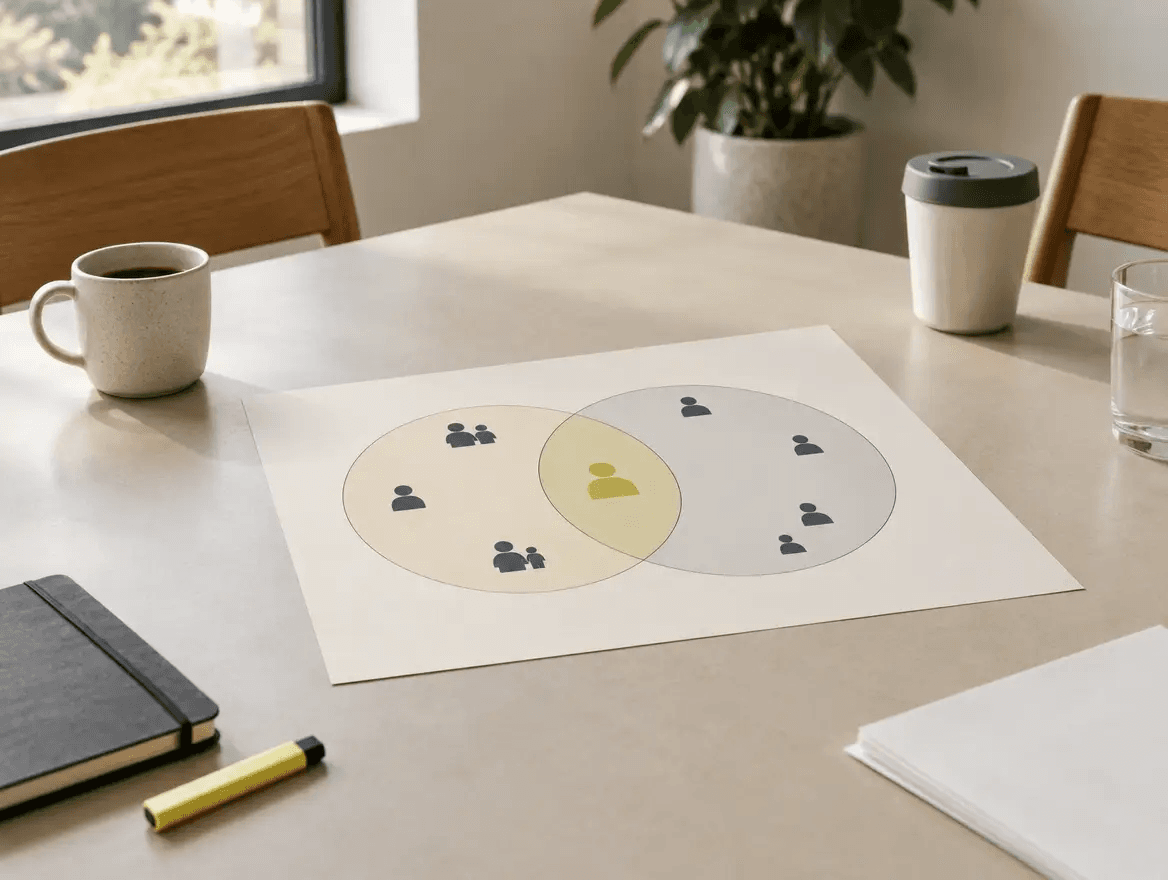
Most workplace conflict starts small, with an issue everyone decides to manage around. Years later, people react to the silence, the delay and the sense of unfairness as much as to the original problem. In a family business, those layers sit on top of family history, and the successor inherits all of it.
In a family business, one person can be a sibling, a manager, a co-owner and a rival for a parent's approval, all before morning tea. Roles blur. Decisions that should be made at work get made at home, or at a family barbecue. Staff who aren't family notice, and they draw their own conclusions about who is treated differently.
Nobody planned it this way. Each small thing seemed not worth a fuss. A late roster change went unchallenged. A promotion went to a relative without a clear explanation. A founder softened a hard conversation because it was his daughter. Each one was manageable alone. Together they became a pattern, and the pattern became the conflict.
Here is the part that is hard to hear. As the successor, you are part of the family system too. You may be someone's child, nephew, niece or sibling. People have a history with you, and your appointment may have changed who sits above whom. They may be watching to see whether you favour your side of the family, or the other.
That is not a failing. It is the situation, and naming it makes it easier to handle. Many of these matters also involve three, four or a whole team, not just two people, so resist the urge to look for one cause or one person to blame.
What can you do yourself before bringing anyone in?
There are three things you can do without any special training: hold one-on-one listening conversations, map who clashes with whom and over what, and put roles and decision rights in writing. They give you facts in place of rumours, and they show the team that the issue is finally being taken seriously.
Hold one-on-one listening conversations
Meet each person privately, away from the shop floor or office. Ask three questions: what is working, what is not working, and what would need to be different.
Listen for the work issue underneath the family story. Do not solve anything in the room. Do not promise outcomes, and do not agree or disagree with what you hear. Close by saying what you will do next and by when, then do it. Delay is a big part of how these situations got here.
Map who clashes with whom, and over what
Put the names on one page. For each clash, note which of four categories it fits: roles, workload, favouritism or old history.
- Roles and workload problems are usually fixable with clearer structure.
- Favouritism needs transparent criteria for decisions such as rosters, pay reviews and promotions.
- Old history is the layer a spreadsheet can't fix. It tells you where a neutral may be needed.
Mark any clash that involves three or more people. Many matters are team matters, and treating them as two-person disputes is how people end up feeling blamed.
Clarify roles and decision rights in writing
Write one page per role: what this person owns, what they decide alone, what they must consult on, and who they go to if they disagree. Include family members in the exercise, including owners.
Ownership is not the same as authority over rostering, hiring or customer decisions. Written roles take the personal sting out of disputes. The question becomes what the role says, not who has more standing at the family dinner table.
If your policies and procedures are out of date or unwritten, HR guidance by the hour can help you review them without a retainer.
How do you set behaviour expectations when nobody is leaving?
Co-write a short team agreement with staff, apply one standard to family and non-family alike, agree how disagreements get raised, and follow through every time. When nobody is leaving, the goal is not harmony. It is a team that can disagree and keep working together, calm, clear and fair.
Co-write the agreement with the team
Run a short session with the team, together or in small groups, depending on how people are feeling. Ask one question: what do we need from each other to do good work here?
Draft five to seven behaviours in plain language. For example: raise a concern with the person first, then with the manager. No family matters on shift. Decisions are made by the role that owns them. Keep it to one page and post it where people can see it. People support what they helped write.
Apply one standard to everyone
Non-family staff watch closely for different rules. If a cousin can arrive late and a driver can't, the agreement is dead on day one.
Check the standard against recent examples. If you wouldn't accept the behaviour from a non-family employee, don't accept it from a relative. The reverse also holds: don't hold family to a harsher standard to prove you are fair. Calm, clear and fair means the same thing both ways.
Agree how disagreements get raised
Disagreement is normal. The agreement should say how it happens: who to go to first, how long before it comes to you, and what is off limits, such as raising issues in front of customers or through other staff.
Give people a route. Without one, grievances go to group chats, the lunchroom and triangles.
Follow through, consistently
An agreement works only if it is applied. When someone breaches it, respond promptly, privately and in proportion, the same way each time. Review it with the team after a few months and adjust.
Know its limits. If a matter involves serious concerns, such as bullying, harassment or safety, an agreement is not the right tool. Those concerns need their own process. Mediation asks what happens next; an investigation asks what happened. Not every matter needs the same process, and the Fair Work Ombudsman and Safe Work Australia publish general information on employer obligations.
How do you handle several people in conflict at once?

Avoid side meetings, sequence your conversations so nobody hears second-hand, and give every person's issue the same weight. Use a group session only once people have been heard individually and agree on the topic. Held too early, a group session can inflame things.
Avoid side meetings and triangles
A triangle forms when A complains to you about B, and you become the carrier of A's view. B then hears it second-hand and goes looking for their own ally. In a family business, the triangles run along family lines very fast.
When someone raises a problem about another person, ask whether they have raised it directly. If not, ask what would make that possible. Then offer to help with the conversation, rather than holding it for them.
Sequence the conversations
Tell everyone the plan: who you will speak to, in what order, and over what window. Keep the format the same for each person. Do the conversations close together so no one feels left until last or told a different story.
Don't relay what one person said to another. Share only what they have agreed can be shared.
Know when a group session helps and when it inflames
A group session helps when:
- the issue is shared, such as rosters, communication or who decides what
- everyone has already been heard one-on-one
- there is a clear topic, ground rules and a time limit
- the people in the room can speak without fear of the person with more power
It tends to inflame things when:
- the topic is really one person's character or conduct
- someone present holds a parent's or owner's authority over the others
- people haven't yet been heard individually
- there are serious concerns that need a different process first
If you can't tell which side of that line you are on, that is a good moment to get a second view before you convene anyone.
What does this look like in a family business? A hypothetical example
Here is a hypothetical example, not a client story. Two siblings and a cousin clash over rostering at a family-owned business. The successor does not pick a winner. She separates the roster process from the family history, writes down who decides what, and agrees how roster concerns are raised.
Imagine a 60-person family-owned distribution business. The founder has retired and his daughter, Mia, is now general manager. Her brother Dan runs the warehouse. Their cousin Marcus builds the weekly roster. Dan believes Marcus gives his mates the best shifts. Marcus believes Dan undermines him in front of the team. Non-family staff have started asking Mia whether the roster is fair.
Mia does not take either side. She holds three separate listening conversations. She finds Dan's concern is partly about visibility (nobody can see how shifts are decided). Marcus's concern is about authority (Dan overrides him on the floor). A third thread, an old argument about who was favoured by their grandfather, sits under both.
Mia then does what she can do herself:
- She writes down roster criteria and posts them: skills, availability, fairness over the month.
- She writes one page on roles. Marcus owns the roster. Dan can request changes through a set route. Mia decides if they disagree.
- She runs a team session to agree a short behaviour agreement, including how roster concerns are raised.
That resolves the work layer. What it can't touch is the grandfather story, which keeps showing up in toolbox talks. That is the family layer, and Mia is not the right person to hold it. She is Dan's sister and Marcus's cousin, and both of them know it. This is the point to bring in someone on nobody's side.
When should you bring in a neutral for the family layer?
Bring in a neutral when family history is spilling into shifts, co-owners are taking sides, or staff see you as partial. You can't be neutral about your own people, and they know it. A neutral is someone on nobody's side, who can run the conversation you can't.
Signs it is time
- Family history keeps surfacing in work discussions, however clear the roles are.
- Co-owners or senior relatives are taking sides, or asking staff to.
- You are seen as partial, or you feel that you are.
- People have stopped speaking directly and communicate through you or by email.
- Staff have asked for transfers, or are quietly disengaging.
- You have already advised or sided with one person, which means you can't be the neutral for them.
Choose the right process
Not every matter needs the same process. The five options below sit on a spectrum, and picking the right one is often the hardest part.
- A management decision. Fits when the issue is clear and within your authority, such as a roster rule or a role boundary.
- HR guidance. Fits when you need to work out how to handle something fairly.
- Conflict coaching. Fits when you, as the leader, need to prepare for hard conversations or build your own approach.
- Mediation. Fits when people need to agree on how to work together going forward.
- An independent investigation. Fits when there are formal concerns or allegations that need facts established and findings made.
What your options look like and cost
All prices below are ex GST, with no retainers and no lock-in contracts.
- Triage call, $290. A 45-minute video call with Shiv Martin, a nationally accredited mediator, followed by a short email of next-step recommendations. There is no obligation and no discount off a later mediation. It is the quickest way to match the matter to the right process.
- HR guidance, $290 an hour. Use it by the hour when you need to think through how to handle something, or review policies and procedures.
- Workplace mediation, half-day $2,900. A 3.5-hour session for two participants, with about $700 for each extra participant as a guide. Larger groups are scoped separately.
- Family business mediation. Where co-owners or family members disagree about the business itself, our business partner dispute mediation uses a full-day session of 7 hours at $4,900, which suits complex matters.
- Conflict coaching for leaders, $1,290. Four one-hour sessions and a plan, useful when you are navigating your own place in the family system.
- Workplace investigations. Quoted after scoping, when the matter has been scoped and the estimate is revisited if the matter changes.
It is also worth knowing how we keep neutrality. We will not mediate a matter we have advised on, and after an investigation a different panel member mediates.
What mediation looks like, in order
Mediation is voluntary and confidential. The mediator does not decide who is right. People agree what happens next. Here is what happens, in order:
- Triage call. We work out whether mediation is the right fit.
- Invitations. Each person is invited, and can choose whether to take part.
- Separate preparation. Each person meets the mediator privately before any joint session.
- The session. A facilitated conversation by video, with separate private rooms, or in person on request.
- Outcome note. A short written note records what people agreed.
That structure matters in a family business. Separate preparation lets each person say the things they would never say in front of a cousin, a parent or the new boss.
Why is the silence in a family business a bigger signal than the argument?
Loud arguments are easier to deal with than quiet ones. In family businesses, silence often means people have decided the issue is too risky to raise. Treat the silence as information. It tells you where people no longer feel safe saying what they think, and that is where to start.
Most advice to successors says to restore harmony fast. We think that is the wrong goal. A team that never disagrees is usually a team that has stopped telling each other the truth. Conflict is not a bad word, and treating it as shameful drives it underground, where it grows.
The second point is about you. Many successors assume that being fair is enough to be seen as neutral. It isn't. Neutral is not a personality trait, it is a position. Someone who manages, has advised one side, or will decide the outcome is not neutral, and no amount of good intentions changes that. In a family system, that applies doubly.
The most useful thing you can do is say it plainly to the team: you are part of this family, you can't be neutral on the family layer, and you will bring in someone who can. That takes pressure off you, and it signals to everyone that the issue is being taken seriously and handled with care, not swept aside.
Your next step
If you're not sure which process fits, book a $290 ex GST triage call with Shiv Martin. It runs 45 minutes by video, ends with a short email of next-step recommendations, and carries no obligation. You can also start with the free two-minute Conflict Check on the Conflict Services site.
We have also written recently about team mediation and about succession conflict in family businesses. This guide does not repeat them, so they are worth reading alongside it.
References
Questions
Other questions people ask
- Can you fire a family member who is causing conflict in the business?
- Whether someone's employment can or should change is a question for a lawyer, and we do not give advice on it. From a conflict point of view, exits rarely settle a team problem, because the remaining people carry the history. Working on roles, expectations and neutral process usually matters more.
- How do you manage relatives as employees?
- Separate the work relationship from the family one. Write down roles and decision rights, apply the same behaviour standard to family and non-family staff, and agree how disagreements get raised. Then follow through consistently, so staff see that the rules do not change depending on surname.
- What if family members are co-owners and staff are taking sides?
- When co-owners disagree, staff often get pulled into the middle. That is a signal to bring in a neutral. Business partner and family business mediation lets each owner set out their priorities in private preparation before a facilitated session. Legal or financial questions go to their own advisers.
- Is family business mediation voluntary and confidential?
- Yes. Mediation is voluntary, so no one is forced to take part, and it is confidential. The mediator does not decide who is right. Each person prepares separately first, then people agree what happens next, and a short outcome note records it.
- How much does family business mediation cost in Australia?
- At Conflict Services, a half-day mediation is $2,900 ex GST for a 3.5-hour session with two participants, with about $700 for each extra participant as a guide. A full-day session of 7 hours, used for business partner disputes and complex matters, is $4,900 ex GST. A $290 ex GST triage call helps you choose.
Written by
Conflict Services
Mediators, an investigator, a leadership coach and HR and governance specialists, matched to the matter.


General information only, not legal advice. Conflict Services provides mediation, HR guidance and policy review.